Back to main page

VELLEThe whole collection to try on.

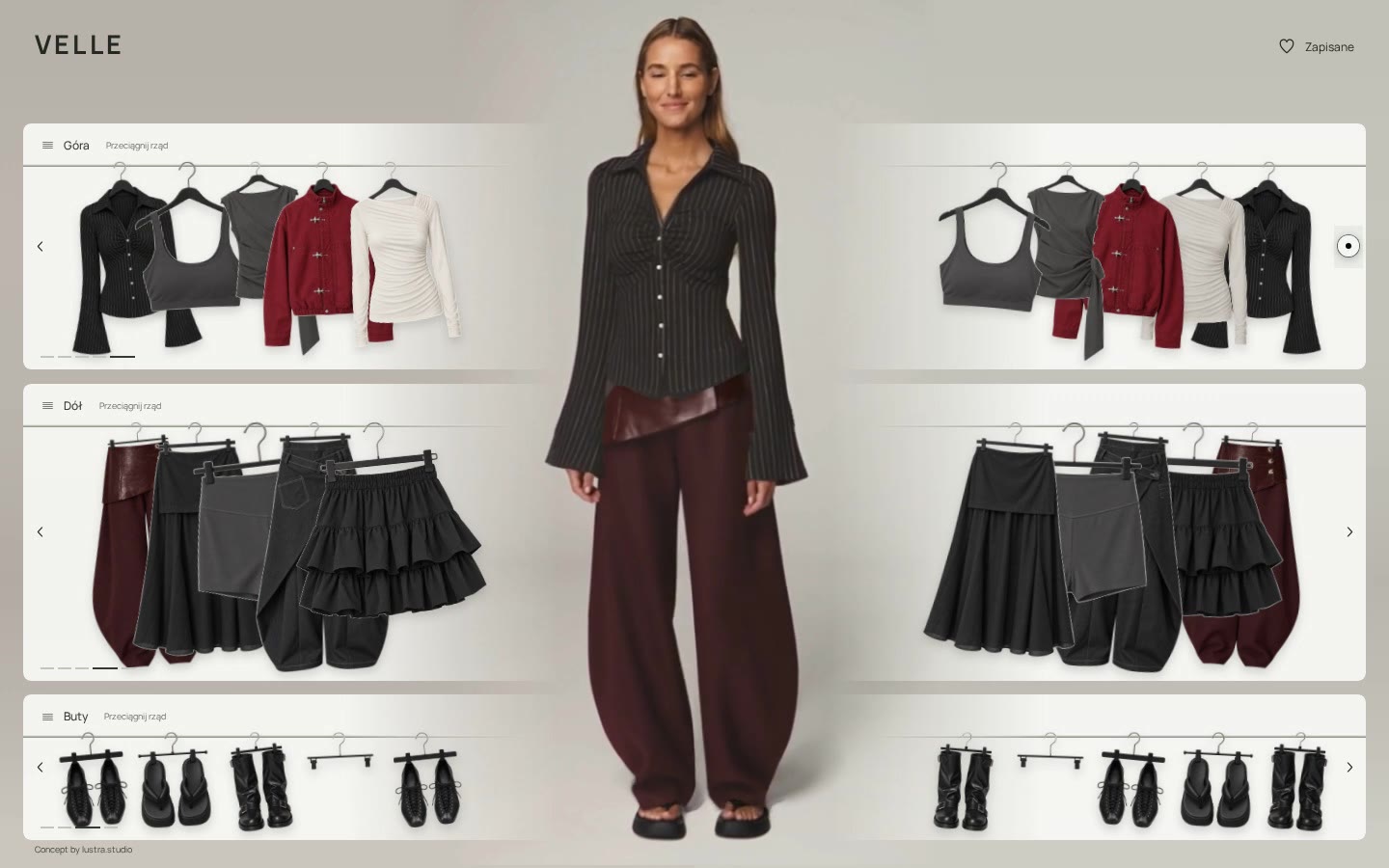
A virtual fitting room for a clothing store. Choose tops, bottoms and shoes, then see the whole outfit on a model in motion. Switch between pieces without stopping the footage.

Client
LUSTRA studio concept
Industry
Fashion, e-commerce
Scope
Concept, video assets, fitting room, interface
Technologies
React, canvas, H.264 video
Tools
Python, video generator, ffmpeg
Year
2026

From individual pieces to a complete outfit.

Photos show each piece on its own. It is harder to see how a shirt pairs with a chosen skirt and how the whole outfit moves.

We wanted visitors to combine clothes on a model while keeping the look of a fashion shoot: the same person, lighting and backdrop.
One take as the basis for the collection

We started with footage of the model in a base outfit. From it, we created variations of the same shot, changing one garment at a time.

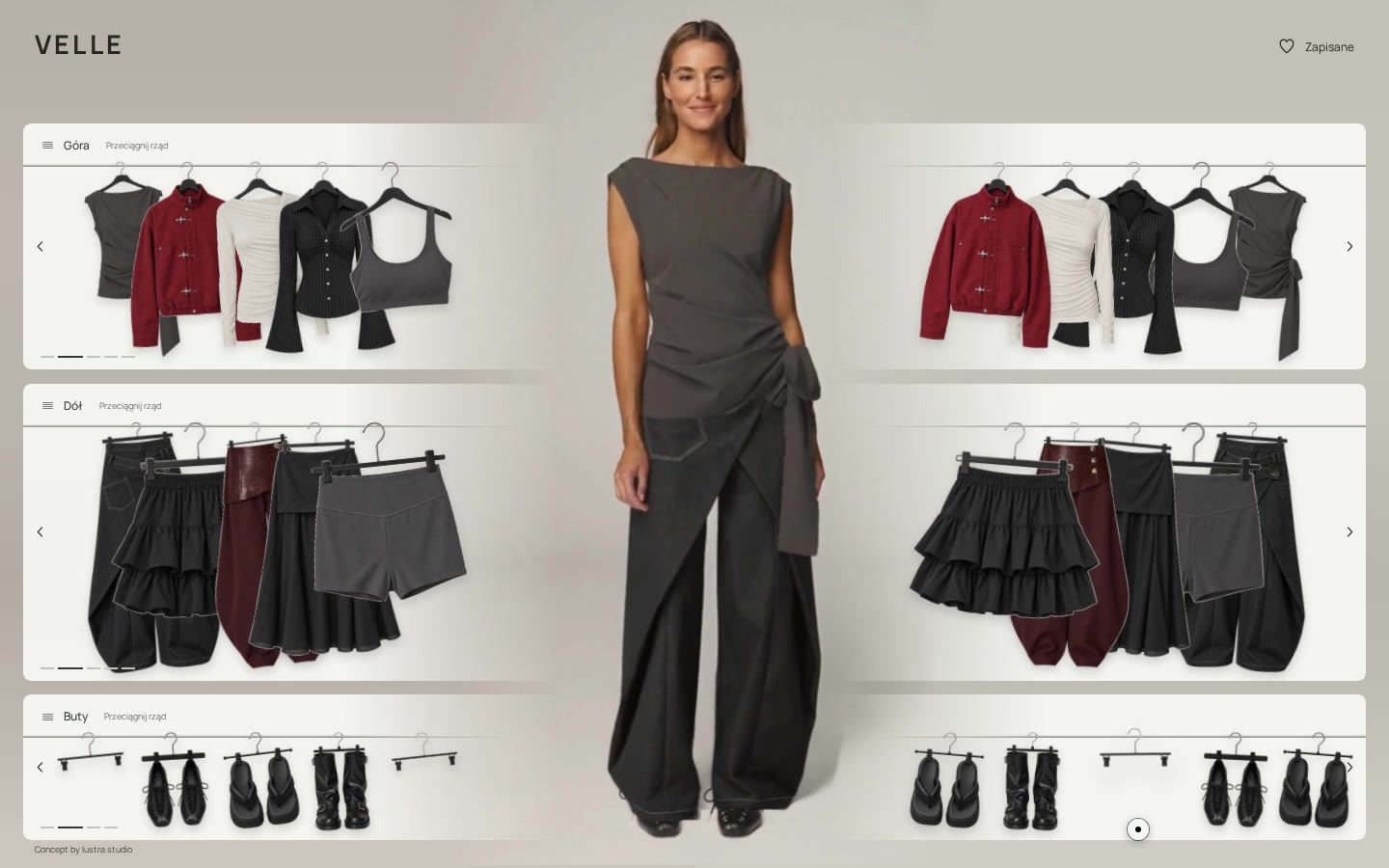
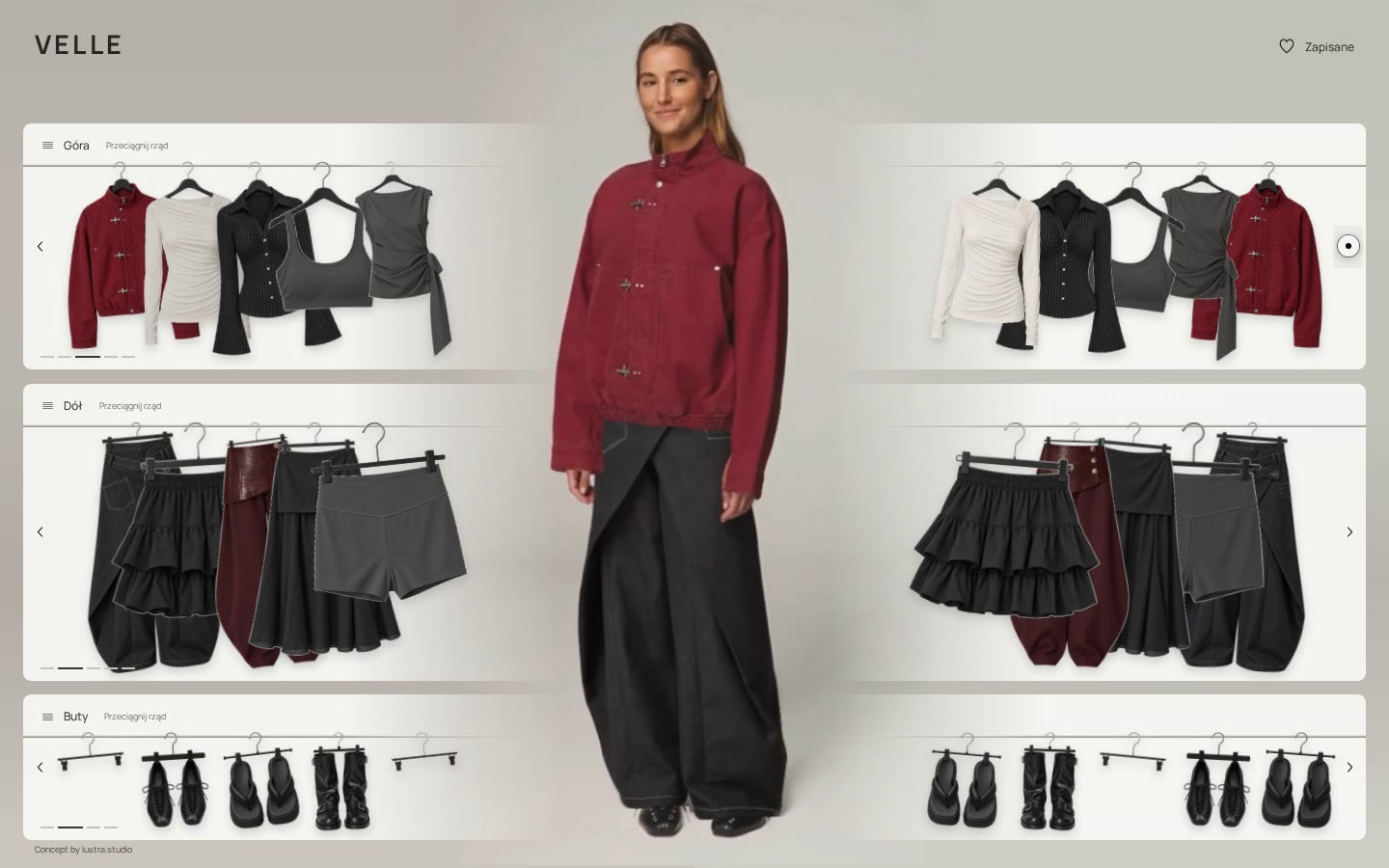
The site combines these variations into the chosen outfit. Five tops, five bottoms and four shoe options make a hundred combinations. Visitors can change them without stopping the footage.

Opening look: tunic and Wrap trousers
01Opening look: tunic and Wrap trousers
The Clasp jacket on the same model
02The Clasp jacket on the same model
Stripe shirt and Balloon trousers
03Stripe shirt and Balloon trousers

Stages of work

  1. 01

    Direction

    One model, a light backdrop and a collection in graphite, ecru and cherry.

  2. 02

    Footage

    A base take and eleven variations featuring individual pieces from the collection.

  3. 03

    Layers

    Synchronising motion, aligning footage and isolating garments.

  4. 04

    Interface

    Choosing clothes from hangers, browsing the collection and saving outfits.

How the fitting room works

  1. 01

    Synchronising motion

    The base footage and garment variations have different frame counts. We align their timing so the model and fabric move together throughout the shot.

  2. 02

    Aligning the footage

    Small shifts appear between generated variations. We correct them frame by frame to keep each garment in place.

  3. 03

    Isolating garments

    We separate each garment and its shadow from the footage. Keeping the original fabric edges helps it sit naturally alongside the other pieces.

  4. 04

    Combining the outfit

    We layer the garments in a set order. Separately prepared sections preserve the relationship between a sleeve, a skirt and the model’s body.

  5. 05

    Interface

    Three rails of hangers: tops, bottoms and shoes. Drag a rail or step through it with the arrows. Favourite outfits go to saved looks.

Details that needed closer attention

Similar fabric tones

The tunic and base shorts are similar in colour. Differences in brightness and the shadow along the hem help us separate them.

Fabric colour and skin tone

Parts of the cherry jacket and skin have similar brightness. Red alone cannot distinguish them, so we also account for differences in hue.

Hands and fabric folds

A hand can sit in front of a garment or partly disappear behind a frill. The layers account for this so each element stays in the right order.

Ties and small details

The skirt ties extended beyond its outline and made it harder to combine with other pieces. We removed them before preparing the layer.

The whole outfit before adding to basket

Visitors choose clothes and see them together on the model straight away. They can compare outfits in the same light and shot, then save their favourites.

Changing a garment does not interrupt the footage. Visitors can watch how the fabric moves while trying different combinations.

Next case studyTermovioBrand website